Fintech Confidential’s podcast episode and newsletter both call Janna Scott an IRS agent in the headline. Their guest biographies list an enrolled-agent credential. Those descriptions refer to different qualifications. A customer weighing her advice needs to know which employment history supports the stronger title.[S04][S01]
An enrolled-agent credential is not an IRS job title
Fintech Confidential · March 24, 2026 · Publisher’s wording
In the headline
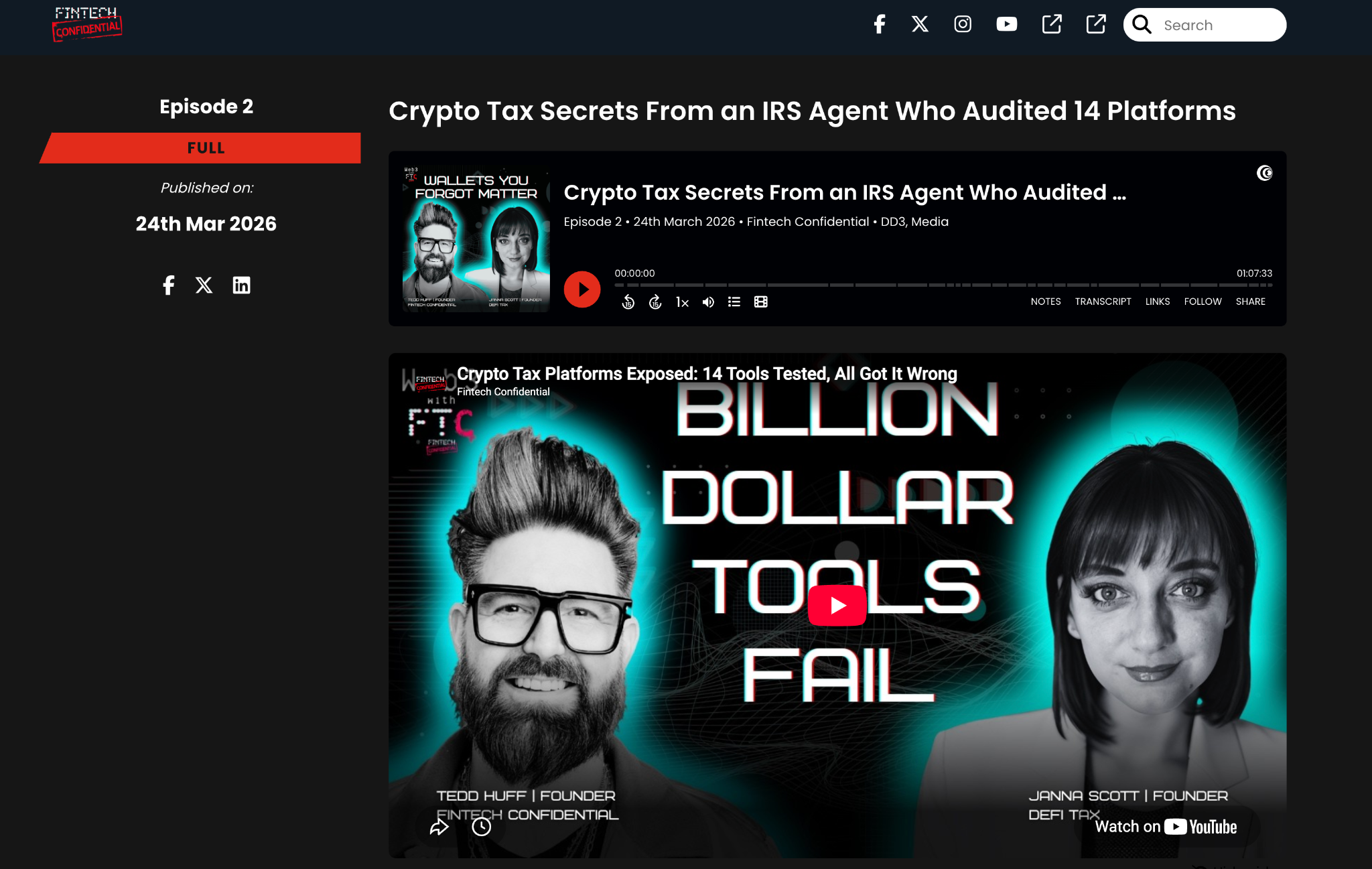
Crypto Tax Secrets From an IRS Agent Who Audited 14 Platforms
In the main introduction
The article asserts federal-agency experience, including the IRS itself
.
In the guest biography
The credential given is IRS Enrolled Agent
.
Inspect the headline, introduction and guest biography · Source notes
The IRS authorizes enrolled agents to represent taxpayers before the agency. Applicants can qualify through examination or qualifying prior IRS employment. Enrollment establishes the representation credential; a federal employment claim needs the actual position and service history.[S02]
| Description | What it represents | The practical check |
|---|---|---|
| Enrolled agent | Authority to represent taxpayers before the IRS. | Verify enrollment and the scope of the services offered. |
| IRS employment | A role working for the agency. | Establish the actual position, office and dates of service. |
A customer may give extra weight to advice from someone who has worked inside the agency. Describing representation rights as an IRS career would mislead that customer. The publisher and the subject should identify the employment supporting the introduction.
The host’s introduction adds to the pitch
In the published transcript at 03:21–04:53, host Tedd Huff introduces Scott’s agency experience, credits her research with stopping crypto audits and describes DeFi Tax as developed through regulatory collaboration. He presents those claims while introducing the founder of the product under discussion.[S04]
That gives customers a reason to pause. A listener may hear the introduction as evidence that the host has checked the guest’s background. The suggested IRS experience could influence whom they hire and how much weight they give Scott’s criticism of competing tax software. A biography supplied for an interview still needs verification.
The newsletter makes the employment claim, too
The newsletter’s introduction describes experience inside federal agencies, including the IRS, while its guest biography uses enrolled-agent language. The employment description should identify the agency office, position and dates of service.[S01]
Ask who supplied the biography and who reviewed it before publication. Did Scott or a representative approve the employment wording? The publisher should explain what it verified and correct any overstatement in the title and introduction.
The publisher’s reputation is on the line
Huff’s introduction deserves the same scrutiny as Scott’s answers. When a host presents a guest’s business claims in his own voice, listeners can mistake repetition for independent verification. If a credential description proves inaccurate, the correction belongs on the episode page, in the show notes and wherever the title was repeated. The publisher is responsible for the wording it publishes.
Customers should not have to reconstruct a guest’s employment history after paying for tax advice. The questions for podcast hosts cover the employment record, earlier advisory assignments and financial claims that an interview should test. An interview appearance alone cannot verify those claims.
Follow the biography through the publicity
The Flaunt and LinkedIn reporting follows a separate profile promoted by DeFi Tax’s named publicist. The federal-claims article examines assertions about regulatory meetings and collaboration. Each claimed role needs to be checked against the work described.[S24][S03]
The headline followed earlier federal claims
The employment wording followed company publicity about regulatory meetings and research, including the April 2025 release and January 2026 launch statement. The full chronology attributes each description to its issuer or publisher and separates collaboration claims from the later job description.[S28][S03]
Scott’s published interview account also identifies a purported Tax Notes publication. A host checking that statement can ask for the article, authors and date, then explain what the work evaluated. Verification should follow the particular claim being made, whether it concerns employment, published research or the product’s performance.[S04]
Check the earlier business assignments, too
A public return lists Scott as preparer and Elite Advisors as the firm. A court-index excerpt describes her as a CAP adviser, and Giving Amplified’s announcement names her as a co-founder. The Elite Advisors, Head Genetics and Giving Amplified articles examine those records and the questions arising from them.[S07][S25][S08]
Before hiring an adviser, ask what she did on earlier offerings and how she was compensated. The answer should name the client and assignment, explain any valuation work, and state which representations she reviewed. That is professional history a buyer can compare with the introduction.
Sources for this article
- S04 Fintech Confidential interview and published transcript30:12–30:58; 50:47–51:04; 58:08–58:17 in the published transcript · Source notes
- S01 Fintech Confidential: published federal-experience claims and credential wordingHeadline; TLDR; main introduction; About The Guest · Source notes
- S02 IRS explanation of enrolled-agent statusEnrolled agent information · Source notes
- S24 Adam Nelson’s LinkedIn promotion of the Flaunt profileMain post; Flaunt link; closing Workhouse media contact · Source notes
- S03 DeFi Tax launch releaseOpening; research claims; media contact · Source notes
- S28 DeFi Tax’s April 23, 2025 research releaseParagraph beginning “She adds”; agency meetings and audit claims · Source notes
- S07 IRS-hosted 2022 foundation return: preparer entryPDF page 13; paid-preparer block · Source notes
- S25 CAP adviser reference in the public court-document indexSearch-indexed excerpt for Document 60; 2:25-cv-09741-MEMF-BFM · Source notes
- S08 Giving Amplified launch account reproduced by DNA VibeOpening; founder descriptions; attributed nonprofit comments · Source notes